Showing posts with label Seamus Heaney. Show all posts

Friday, February 1, 2019

The Living Dead

~ Honouring our poetic ancestors ~

Today 'The Living Dead' refers to two poets: the anonymous Anglo-Saxon author of the Old English epic Beowulf, and the great contemporary Irish poet Seamus Heaney (1939-2013) who translated it in 1999 – by no means the only translation but surely the defintive one to date. This comparison of translations certainly settles it for me, even though the author of the article prefers another. He does allow that Heaney's is at least the most popular.

Translations are tricky things!  What struck me when I came across this one in my local library was the immediacy and colloquialism of the language, which makes it exciting stuff – as I'm sure it was for its first audiences, hearing rather than reading it. It also manages to be wonderful (and apparently effortless) poetry as well as adhering to the characteristics of the Old English verse it was first written in.

It's much too long to post here, even if I could find a postable copy.  Here is the beginning of it, a longish excerpt which gives you the idea.

And here, so you can experience it as its original author intended, is Heaney himself reciting it on YouTube – an absolute treat, but you need to give it your full attention:


This is Part 1, which is probably enough, or more than enough, for one sitting. You can easily find Part 2 on YouTube when you're ready to continue. Such early epic poetry was the television drama of its age – or the cinema, with a whole community sitting together and listening – but the visuals were supplied by their imaginations, based on how vividly it was written and how enthrallingly it was told.

I hope you enjoy revisiting our origins! The name of Beowulf's author is long forgotten, but his words live on in new translations for different eras.

Seamus Heaney's own poems are likely to live on a long time too, and are well worth discovering via his Amazon page or sites like Poetry Foundation. I'm glad he also brought Beowulf to life for me in a way others did not succeed in doing.

I'm not in the business of selling books here, and I certainly don't stand to gain from it, but I must mention that if you should want to buy the book, this version (the one I found at my library) has the most beautiful photographic illustrations on facing pages of the text, as you can see if you use the 'Look inside' feature at Amazon and persevere past the first few pages.


Material shared in 'The Living Dead' is presented for study and review. Poems, photos and other writings and images remain the property of the copyright owners, where applicable (older poems may be out of copyright).

Wednesday, September 26, 2018

Poets United Midweek Motif ~ The Wall


“We build too many walls and not enough bridges.”— Isaac Newton


SOURCE


“Graffiti is usually a protest — ink on walls – or has a reason for being naughty or aggressive.” — Cy Twombly


       Midweek Motif ~ The Wall


How do you react when you encounter a wall? Are you happy or do you feel left out? Does it look like an obstacle, a barrier or is it more like a symbol of safety and strength?


The wall has been a part of human civilization, either to keep things within or to wall out unwanted elements.


You are to write about The Wall; visible, invisible; real or imaginary; and even historic walls like the Great Wall of China or the Berlin Wall will do.


It might also be about your garden fence if you have one.


A couple of wall poems for you:

Mending Wall
by Robert Frost

Something there is that doesn't love a wall,
That sends the frozen-ground-swell under it,
And spills the upper boulders in the sun;
And makes gaps even two can pass abreast.
The work of hunters is another thing:
I have come after them and made repair
Where they have left not one stone on a stone,
But they would have the rabbit out of hiding,
To please the yelping dogs. The gaps I mean,
No one has seen them made or heard them made,
But at spring mending-time we find them there.
I let my neighbour know beyond the hill;
And on a day we meet to walk the line
And set the wall between us once again.
We keep the wall between us as we go.
To each the boulders that have fallen to each.
And some are loaves and some so nearly balls
We have to use a spell to make them balance:
"Stay where you are until our backs are turned!"
We wear our fingers rough with handling them.
Oh, just another kind of out-door game,
One on a side. It comes to little more:
There where it is we do not need the wall:
He is all pine and I am apple orchard.
My apple trees will never get across
And eat the cones under his pines, I tell him.
He only says, "Good fences make good neighbours."
Spring is the mischief in me, and I wonder
If I could put a notion in his head:
"Why do they make good neighbours? Isn't it
Where there are cows? But here there are no cows.
Before I built a wall I'd ask to know
What I was walling in or walling out,
And to whom I was like to give offence.
Something there is that doesn't love a wall,
That wants it down." I could say "Elves" to him,
But it's not elves exactly, and I'd rather
He said it for himself. I see him there
Bringing a stone grasped firmly by the top
In each hand, like an old-stone savage armed.
He moves in darkness as it seems to me,
Not of woods only and the shade of trees.
He will not go behind his father's saying,
And he likes having thought of it so well
He says again, "Good fences make good neighbours."


Scaffolding
by Seamus Heaney

Masons, when they start upon a building,
Are careful to test out the scaffolding;

Make sure that planks won’t slip at busy points,
Secure all ladders, tighten bolted joints.

Yet all this comes down when the jobs done
Showing off walls of sure and solid stone.

So if, my dear, there sometimes seem to be
Old bridges breaking between you and me

Never fear. We may let the scaffolds fall
Confident that we have built our wall.


Please share your new poem using Mr. Linky below and visit others in the spirit of the community—
                (Next week Susan’s Midweek Motif will be ~ Balance)


Wednesday, April 4, 2018

Poets United Midweek Motif ~ Beginnings


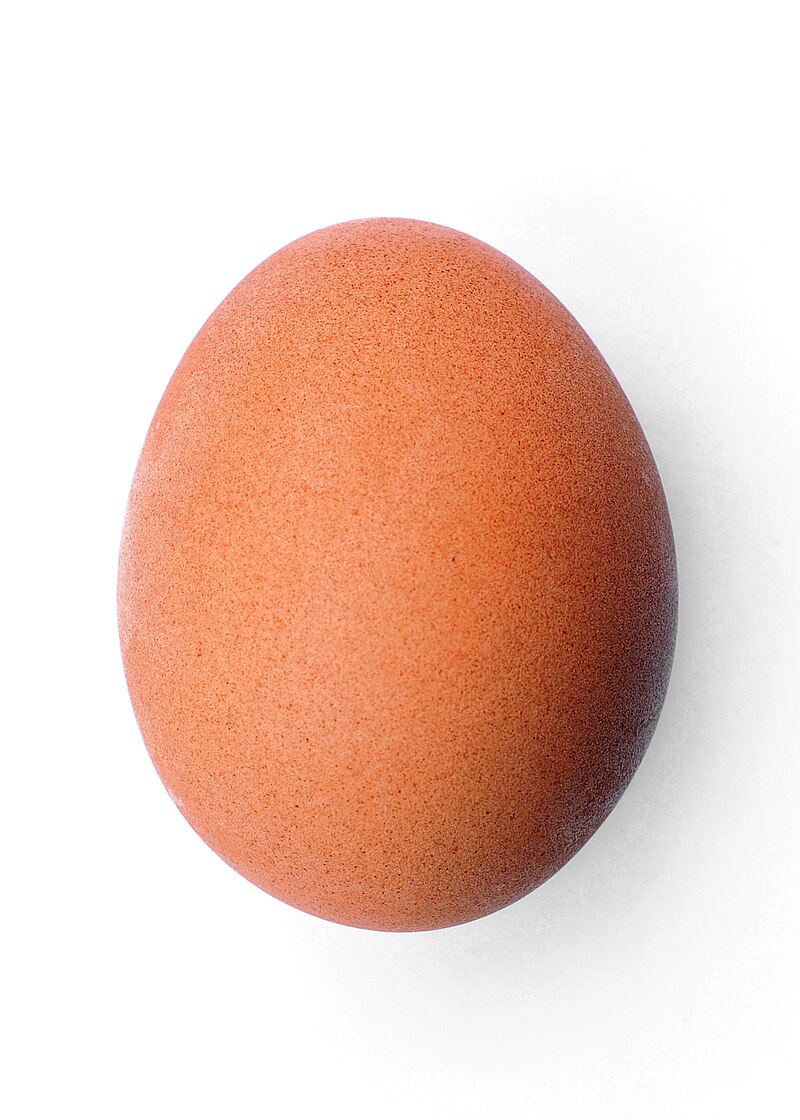
Chicken egg 2009-06-04.jpg               
Egg
Joseph Crawhall - White Hen And Chickens.jpg

White Hen And Chickens by 
Joseph Crawhall III 
*****

“Since when," he asked, "Are the first line and last line of any poem where the poem begins and ends?”  ― Seamus Heaney
                                                          
“The journey of a thousand miles begins with a single step.” 
― Lao Tzu                    


Not knowing when the Dawn will come,
I open every Door,
Or has it Feathers, like a Bird,
Or Billows, like a Shore—


Beautiful World - In The Beginning


Midweek Motif ~ Beginnings

The question of "how to begin" has generated books upon books in every game and every field, and the answers are still not exhausted.  Yet things begin, and often before the visible and public (or private) beginning.  Consider how a flower opens.  Would you count its beginning in the bud?  in the seed?  in the idea of  a flower?  

Your Challenge: In your new poem, trace a thing, event, or action back to its true or imagined beginnings.


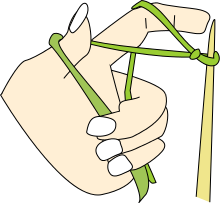
Casting on

Tyger Tyger, burning bright, 
In the forests of the night; 
What immortal hand or eye, 
Could frame thy fearful symmetry? 
In what distant deeps or skies. 
Burnt the fire of thine eyes? 
On what wings dare he aspire? 
What the hand, dare seize the fire? 
And what shoulder, & what art, 
Could twist the sinews of thy heart? 
And when thy heart began to beat, 
What dread hand? & what dread feet? 
What the hammer? what the chain, 
In what furnace was thy brain? 
What the anvil? what dread grasp, 
Dare its deadly terrors clasp! 
When the stars threw down their spears 
And water'd heaven with their tears: 
Did he smile his work to see? 
Did he who made the Lamb make thee? 
Tyger Tyger burning bright, 
In the forests of the night: 
What immortal hand or eye, 
Dare frame thy fearful symmetry?

excerpt  from Elegy in Joy  By Muriel Rukeyser

We tell beginnings: for the flesh and the answer,
or the look, the lake in the eye that knows,
for the despair that flows down in widest rivers,
cloud of home; and also the green tree of grace,
all in the leaf, in the love that gives us ourselves.

The word of nourishment passes through the women,
soldiers and orchards rooted in constellations,
white towers, eyes of children: 
saying in time of war What shall we feed?
I cannot say the end.

Nourish beginnings, let us nourish beginnings.
Not all things are blest, but the
seeds of all things are blest.
The blessing is in the seed.

This moment, this seed, this wave of the sea, this look, this instant of love.
Years over wars and an imagining of peace.  Or the expiation journey
toward peace which is many wishes flaming together,
fierce pure life, the many-living home.
Love that gives us ourselves, in the world known to all
new techniques for the healing of the wound,
and the unknown world.  One life, or the faring stars.

Start Close In

by David Whyte
Start close in, don’t take the second step or the third, start with the first thing close in, the step you don’t want to take.

. . . . 
(Read the rest HERE.)

source
"Large streams from little fountains flow, 
Tall oaks from little acorns grow."
(D. Everett in The Columbian Orator, 1797)
*****
Please share your new poem using Mr. Linky below and visit others in the spirit of the community—
(Next week Sumana’s Midweek Motif will be ~ Vision.)

Wednesday, November 2, 2016

Poets United Midweek Motif ~ The Day of the Dead

Soul dancing
source

To the people of New York, Paris, or London, "death" is a word that is never pronounced because it burns the lips. The Mexican, however, frequents it, jokes about it, caresses it, sleeps with it, celebrates it; it is one 
of his favorite toys and most steadfast love. 
Of course, in his attitude perhaps there is as much fear
as there is in one of the others; at least he does not hide it; 
he confronts it face to face with patience, disdain, or irony.
 --Octavio Paz, The Labyrinth of Solitude

Tribe members and their supporters march with signs protesting the Dakota Access Pipeline.
“Destruction of Sacred Burial Grounds Prompts Federal Judge to Protect Some Tribal Sites from Dakota Access Pipeline”  By Larry Buhl • Tuesday, September 6, 2016 
(This did not work out.  The courts and feds must make more decisions.)

Show me the manner in which a nation or a community cares for its dead and I will measure with mathematical exactness the tender sympathies of its people, their respect for the laws of the land and their loyalty to high ideals. 
--William E. Gladstone

William-Adolphe Bouguereau (1825-1905) - The Day of the Dead (1859).jpg
The Day of the Dead by 

William-Adolphe Bouguereau (1859)


Midweek Motif ~
The Day of the Dead


November 2nd is the second day of Day of the Dead or El Dia de los Muertos celebration in Mexico.

This is not a day of burial, but one of commemoration and feasting at the graves of dead relatives and friends. If this seems bizarre to you, think how lonely visits to graves must seem to those who honor El Dia de los Muertos.


Your Challenge:  In a new poem, bring us to a traditional way of commemorating the dead.

Los Adornos.JPG
source

Poetry Celebrations.com!

From The Poetry Friday Anthology for Celebrations
Sylvia Vardell and Janet Wong, Editors. (Pomelo Books, 2015)


 Seamus Heaney reads 'Funeral Rites.'     York Festival of Ideas, 26/06/2013


By Geoffrey Grigson

#


Please share your new poem using Mr. Linky below and visit others
in the spirit of the community.  

Don't forget to put a link to this prompt with your poem.


(Next week Sumana's Midweek Motif will be ~ Path)


Wednesday, January 13, 2016

Poets United Midweek Motif ~ Food

"If you can't feed a hundred people, then feed just one"---Mother Teresa

"So long as you have food in your mouth, you have solved all questions for the time being."---Franz Kafka

"Animals are my friends.....and I don't eat my friends"---George Bernard Shaw

"Wine is bottled poetry"---Robert Louis Stevenson


source

Midweek Motif ~ Food

Today I want you to write about "Food" you like or even dislike.

You may deal with pure food items or recipes in your own way or spice it up with figures of speech, various poetic devices.

Have fun!

Here is some food for thought:


The Health-Food Diner

by Maya Angelou

The Health-Food Diner
No sprouted wheat and soya shoots
And Brussels in a cake,
Carrot straw and spinach raw,
(Today, I need a steak).

Not thick brown rice and rice pilaw
Or mushrooms creamed on toast,
Turnips mashed and parsnips hashed,
(I'm dreaming of a roast).

Health-food folks around the world
Are thinned by anxious zeal,
They look for help in sea food kelp
(I count on breaded veal).

No smoking signs, raw mustard greens,
Zucchini by the ton,
Uncooked kale and bodies frail
Are sure to make me run

to

Loins of pork and chicken thighs
And standing rib, so prime,
Pork chops brown and fresh groundround
(I crave them all the time).

Irish stews and boiled corned beef
and hot dogs by the scores,
or any place that saves a space
For making carnivores.


Fame Is A Fickle Food

by Emily Dickinson

Fame is a fickle food
Upon a shifting plate
Whose table once a 
Guest but not
The second time is set

Whose crumbs the crows inspect
And with ironic caw
Flap past it to the Farmer's corn--
Men eat of it and die.


Sonnet 75

by William Shakespeare

So are you to my thoughts as food to life,
Or as sweet seasoned showers to the ground;
And for the peace of you I hold such strife
As 'twixt a miser and his wealth is found:
Now proud as an enjoyer, and anon
Doubting the filching age will steal his treasure;
Now counting best to be with you alone,
Then bettered that the world may see my pleasure;
Sometime all full with feasting on your sight,
And by and by clean starved for a look,
Possessing or pursuing no delight
Save what is had, or must from you be took.
      Thus do I pine and surfeit day by day,
      Or gluttoning on all, or all away.


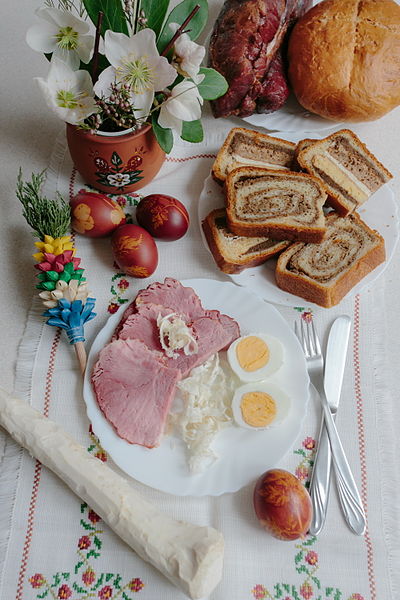
Oysters

by Seamus Heaney

Our shells clacked on the plate.
My tongue was a filling estuary.
My palate hung with starlight:
As I tasted the salty Pleiades
Orion dipped his foot into the water.
Alive and violated,
They lay on their bed of ice:
Bivalves: the split bulb
And philandering sigh of ocean
Millions of them ripped and shucked and scattered.
We had driven to that coast
Through flowers and limestone
And there we were, toasting friendship,
Laying down a perfect memory
In the cool of thatch and crockery.
Over the Alps, packed deep in hay and snow,
The Romans hauled their oysters south to Roam:
I saw damp panniers disgorge
The frond-lipped, brine-stung
Glut of privilege
And was angry that my trust could not repose
In the clear light, like poetry or freedom
Leaning in from sea. I ate the day
Deliberately, that its tang
Might quicken me all into verb, pure verb.


Please share your new poem using Mr. linky below and visit others in the spirit of the community.

                              (Next week Susan's Midweek Motif will be Mountain)


Wednesday, May 6, 2015

Poets United Midweek Motif ~ Honoring our Elders


“Children have never been very good at listening to their elders, 
but they have never failed to imitate them.” 
― James Baldwin

“Treasure the wisdom of old age.
Learn from elder people and be wise.” 

― Lailah Gifty Akita

MC Amy Kietzman and Attendees at Honoring our Neighborhood Elders 
on April 11, 2015.  I cannot find a news story!!  
HERE is the link to Amy's well-annotated Facebook pictures. 

Midweek Motif ~ 
Honoring our Elders


On a West Philadelphia website called Honoring Our Neighborhood Elders, I found this explanation of an event that is now in its third year:  
We are a diverse and vibrant neighborhood. Our cycle of life needs to be fully celebrated, especially this generation of elders who are not connected to the internet and social media. Their stories need to be heard, their skills passed on, their accomplishments acknowledged and valued. Various neighborhood congregations, civic organizations and groups are coming together to do just that, to celebrate who we are by celebrating our elders.
Wonderful, right? Her volunteers interviewed each honoree and introduced them with parts of their life stories. 


Your Challenge: Choose an Elder to honor in a poem.  Make us feel we know her, him or they.


by Faith Shearin

They are taking so many things with them:
their sewing machines and fine china,

their ability to fold a newspaper
with one hand and swat a fly.

They are taking their rotary telephones,
and fat televisions, and knitting needles,

their cast iron frying pans, and Tupperware.
They are packing away the picnics . . . . 

(Read the rest HERE at The Writer's Almanac.)


excerpt from Indians Never Say Good-bye


. . . . 
When my mother and grandmother went to town, Ain’t Sally took me for a walk around her place. The farm had belonged to her relatives. We went down to the dry gorge and she pointed out all kinds of roots and trees. She asked me if I knew about the plants of the pasture. I said yes. I thought I was lying.
     As we walked farther from the house, I remember a hot gusty wind picked up her voice like dust tendrils on bedrock and blew it away from me. I ran to catch the sound. I found Ain’t Sally sitting on a granite rock.
     —Ala Tek. Indian girl.
     —Come and see, on our land, the four winds of the old days will blow through our hair.
     Then she tugged at my black braids.
     —Come and visit the Snakes, Ala Tek.
     —When I was your age they blew across this place like red dust devils on flat neutral plains.
     —Can you see them.
     —Do you hear the Snake People calling us?
. . . . 

(Read the rest HERE at The Poetry Foundation.)


Between my finger and my thumb  
The squat pen rests; snug as a gun.
Under my window, a clean rasping sound   
When the spade sinks into gravelly ground:   
My father, digging. I look down

Till his straining rump among the flowerbeds   
Bends low, comes up twenty years away   
Stooping in rhythm through potato drills   
Where he was digging.

The coarse boot nestled on the lug, the shaft   
Against the inside knee was levered firmly.
He rooted out tall tops, buried the bright edge deep
To scatter new potatoes that we picked,
Loving their cool hardness in our hands.

By God, the old man could handle a spade.   
Just like his old man.
. . . . 
(Read the rest HERE at the Poetry Foundation)


For those who are new to Poets United:  Please share only new and original work.  Post your poem on your site and then link it here. Please leave a greeting and then visit and comment on our poems. 

Next week you are in for a treat! 
Our next Midweek Motif ~ Waves  is by 
Sumana Roy who has joined the Poets United team.  
Show up to give Sumana a huge welcome!


Mister Linky's Magical Widgets -- Auto-Linky widget will appear right here!
This preview will disappear when the widget is displayed on your site.
If this widget does not appear, click here to display it.

Blog Archive

Followers