Showing posts with label Wallace Stevens. Show all posts

Wednesday, November 13, 2019

Poets United Midweek Motif ~ Winter


“In the depth of winter I finally learned that there was in me an invincible summer.”— Albert Camus

SOURCE


“I wonder if the snow loves the trees and fields, that it kisses them so gently? And then it covers them up snug, you know, with a white quilt; and perhaps it says, “Go to sleep, darlings, till the summer comes again.”— Lewis Carroll, Alice’s Adventures in Wonderland & Through the Looking-Glass


      Midweek Motif ~ Winter


Winter is not that much cold, bleak and depressing where I live. It rather sends off a vibe of joy and color. It’s a time for comfort and good food. Winter is sunny, bright with a nip in the air. Everyone is happy as the sweltering heat is no more.

It would be perfect if such winter story was true for all. For the poor and homeless winter is a more or less grim struggle as elsewhere.


For this week write a winter poem.


Sharing a few poems now:


Horses
by Pablo Neruda

From the window I saw the horses.
I was in Berlin, in winter. The light
had no light, the sky had no heaven.
The air was white like wet bread.
And from my window a vacant arena,
bitten by the teeth of winter.
Suddenly driven out by a man,
ten horses surged through the mist.
Like waves of fire, they flared forward
and to my eyes filled the whole world,
empty till then. Perfect, ablaze,
they were like ten gods with pure white hoofs,
with manes like a dream of salt.
Their rumps were worlds and oranges.
Their color was honey, amber, fire.
Their necks were towers
cut from the stone of pride,
and behind their transparent eyes
energy raged, like a prisoner.
There, in silence, at mid-day,
in that dirty, disordered winter,
those intense horses were the blood
the rhythm, the inciting treasure of life.
I looked. I looked and was reborn:
for there, unknowing, was the fountain,
the dance of gold, heaven
and the fire that lives in beauty.
I have forgotten that dark Berlin winter.
I will not forget the light of the horses.


The Snow Man
by Wallace Stevens

One must have a mind of winter
To regard the frost and the boughs
Of the pine-trees crusted with snow;

And have been cold a long time
To behold the junipers shagged with ice,
The spruces rough in the distant glitter

Of the January sun; and not to think
Of any misery in the sound of the wind,
In the sound of a few leaves,

Which is the sound of the land
Full of the same wind
That is blowing in the same bare place

For the listener, who listens in the snow,
And, nothing himself, beholds
Nothing that is not there and the nothing that is.


Those Winter Sundays
by Robert Hayden

Sundays too my father got up early
and put his clothes on in the blueblack cold,
then with cracked hands that ached
from labor in the weekday weather made
banked fires blaze. No one ever thanked him.

I’d wake and hear the cold splintering, breaking.
When the rooms were warm, he’d call,
and slowly I would rise and dress,
fearing the chronic angers of that house,

Speaking indifferently to him,
who had driven out the cold
and polished my good shoes as well.
What did I know, what did I know
of love’s austere and lonely offices?


Not Only the Eskimos
by Lisel Mueller

Not only the Eskimos
 We have only one noun
 but as many different kinds:
                                         
 the grainy snow of the Puritans
 and snow of soft, fat flakes,

 guerrilla snow, which comes in the night
 and changes the world by morning,

 rabbinical snow, a permanent skullcap
 on the highest mountains,

 snow that blows in like the Lone Ranger,
 riding hard from out of the West,

 surreal snow in the Dakotas,
 when you can't find your house, your street,
 though you are not in a dream
 or a science-fiction movie,

 snow that tastes good to the sun
 when it licks black tree limbs,
 leaving us only one white stripe,
 a replica of a skunk,

 unbelievable snows:
 the blizzard that strikes on the tenth of April,
 the false snow before Indian summer,
 the Big Snow on Mozart's birthday,
 when Chicago became the Elysian Fields
 and strangers spoke to each other,

 paper snow, cut and taped,
 to the inside of grade-school windows,

 in an old tale, the snow
 that covers a nest of strawberries,
 small hearts, ripe and sweet,
 the special snow that goes with Christmas,
 whether it falls or not,

 the Russian snow we remember
 along with the warmth and smell of furs,
 though we have never traveled
 to Russia or worn furs,

 Villon's snows of yesteryear,
 lost with ladies gone out like matches,
 the snow in Joyce's "The Dead,"
 the silent, secret snow
 in a story by Conrad Aiken,
 which is the snow of first love,

 the snowfall between the child
 and the spacewoman on TV,

 snow as idea of whiteness,
 as in snowdrop, snow goose, snowball bush,

 the snow that puts stars in your hair,
 and your hair, which has turned to snow,

 the snow Elinor Wylie walked in
 in velvet shoes,

 the snow before her footprints
 and the snow after,

 the snow in the back of our heads,
 whiter than white, which has to do
 with childhood again each year.


Please share your new poem using Mr. Linky below and visit others in the spirit of the community—

(Next week Susan’s Midweek Motif will be ~ Awakening)


Wednesday, November 6, 2019

Poets United Midweek Motif ~ Authenticity


  “But to be what I am, to live what I was meant to live, to want to sound like no one else, to yield the blossoms dictated to my heart: this is what I want - and this surely cannot be arrogance.”
― Rainer Maria Rilke (Letters on Life)

“Some writers confuse authenticity, which they ought always to aim at, with originality, which they should never bother about.”
― W.H. Auden

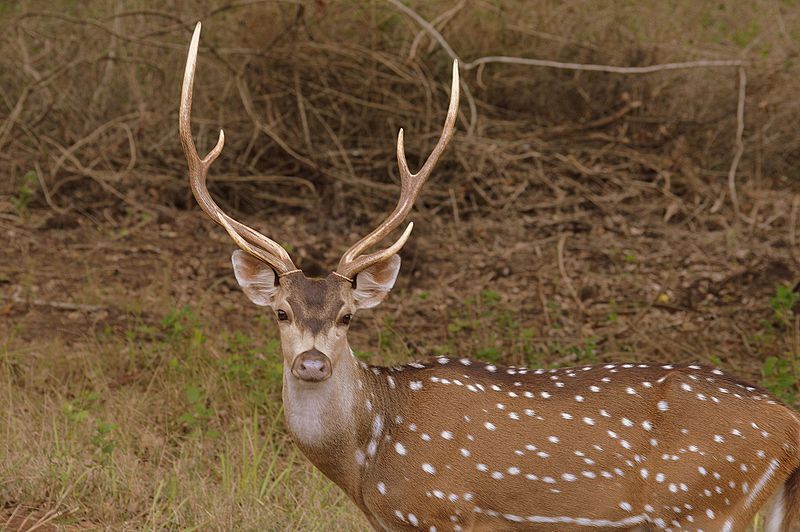
File:The authentic look of a deer.jpg
source
 
“To be authentic, we must cultivate the courage to be imperfect — and vulnerable. We have to believe that we are fundamentally worthy of love and acceptance, just as we are. I’ve learned that there is no better way to invite more grace, gratitude and joy into our lives than by mindfully practicing authenticity.”
 — Brené Brown


 Midweek Motif ~ Authenticity

 (the quality of being real or true)

What makes each of us authentic?  Where and when are we most authentic?  Do people perceive us as inauthentic if we change?  In what ways does authenticity shape anyone's writing and art?  


As Sumana would say, "We are all ears."


source


Bouquet of Roses in Sunlight 

 by Wallace Stevens

Say that it is a crude effect, black reds,
Pink yellows, orange whites, too much as they are
To be anything else in the sunlight of the room,


Too much as they are to be changed by metaphor,
Too actual, things that in being real
Make any imaginings of them lesser things.


And yet this effect is a consequence of the way
We feel and, therefore, is not real, except
In our sense of it, our sense of the fertilest red,


Of yellow as first color and of white,
In which the sense lies still, as a man lies,
Enormous, in a completing of his truth.


Our sense of these things changes and they change,
Not as in metaphor, but in our sense
Of them.  So sense exceeds all metaphor.


It exceeds the heavy changes of the light.
It is like a flow of meanings with no speech
And of as many meanings as of men.


We are two that use these roses as we are,
In seeing them.  This is what makes them seem
So far beyond the rhetorician’s touch.


An Ancient Gesture

       by
I thought, as I wiped my eyes on the corner of my apron:
Penelope did this too.

And more than once: you can't keep weaving all day
And undoing it all through the night;
Your arms get tired, and the back of your neck gets tight;
And along towards morning, when you think it will never be light,
And your husband has been gone, and you don't know where, for years.

Suddenly you burst into tears;
There is simply nothing else to do.

And I thought, as I wiped my eyes on the corner of my apron:
This is an ancient gesture, authentic, antique,
In the very best tradition, classic, Greek;
Ulysses did this too.

But only as a gesture,—a gesture which implied
To the assembled throng that he was much too moved to speak.

He learned it from Penelope.
.
.
. 

Penelope, who really cried.
 
Odysseus and Penelope by Francesco Primaticcio (1563)


We wear the mask that grins and lies,
It hides our cheeks and shades our eyes,—
This debt we pay to human guile;
With torn and bleeding hearts we smile
And mouth with myriad subtleties,
Why should the world be over-wise,
In counting all our tears and sighs?
Nay, let them only see us, while

     We wear the mask.
We smile, but oh great Christ, our cries
To thee from tortured souls arise.
We sing, but oh the clay is vile
Beneath our feet, and long the mile,
But let the world dream otherwise,

     We wear the mask!

source

 ***
Please share your new poem using Mr. Linky below and visit others in the spirit of the community—
(Next week Sumana’s Midweek Motif will be ~ Winter )
***

Wednesday, July 25, 2018

Poets United Midweek Motif ~ Wilderness


   “Wilderness is not a luxury but a necessity of the human spirit.”— Edward Abbey


Christ in the Wilderness by Ivan Kramskoi


“To plunder, to slaughter, to steal, these things they misname empire; and where they make a wilderness, they call it peace.”— Tacitus


Midweek Motif ~ Wilderness


This week we are away from our frenzied, civilized lives into the wilderness, places untrammeled by man: in reality or in imagination (like hikes with friends or solitary day trips).


You might also discover a bit of wilderness, traces of the wild in the cities / in people too.


Is wilderness a place? Is it an instinct? Is it an idea?


How does wilderness make you feel?


Share some wilderness moments in your poems today:


A Voice In The Wilderness
by Audrey Hepburn
            
I roamed the streets of Rome,
It felt like home,
People told me to stay,
But I said no 'This is my Roman Holiday',

I was a flower seller, poor and dirty,
but sang like a canary,
Henry Higgins said maybe,
And called me his Fair Lady.

I was being chased,
Life was a maze,
Four men made it a craze,
It was more like a game of charades. 


Wilderness
by Carl Sandburg

There is a wolf in me . . . fangs pointed for tearing gashes . . . a red tongue for raw meat . . . and the hot lapping of blood—I keep this wolf because the wilderness gave it to me and the wilderness will not let it go.    
               
There is a fox in me . . . a silver-gray fox . . . I sniff and guess . . . I pick things out of the wind and air . . . I nose in the dark night and take sleepers and eat them and hide the feathers . . . I circle and loop and double-cross.

There is a hog in me . . . a snout and a belly . . . a machinery for eating and grunting . . . a machinery for sleeping satisfied in the sun—I got this too from the wilderness and the wilderness will not let it go.

There is a fish in me . . . I know I came from salt-blue water-gates . . . I scurried with shoals of herring . . . I blew waterspouts with porpoises . . . before land was . . . before the water went down . . . before Noah . . . before the first chapter of Genesis.

There is a baboon in me . . . clambering-clawed . . . dog-faced . . . yawping a galoot’s hunger . . . hairy under the armpits . . . here are the hawk-eyed hankering men . . . here are the blonde and blue-eyed women . . . here they hide curled asleep waiting . . . ready to snarl and kill . . . ready to sing and give milk . . . waiting—I keep the baboon because the wilderness says so.

There is an eagle in me and a mockingbird . . . and the eagle flies among the Rocky Mountains of my dreams and fights among the Sierra crags of what I want . . . and the mockingbird warbles in the early forenoon before the dew is gone, warbles in the underbrush of my Chattanoogas of hope, gushes over the blue Ozark foothills of my wishes—And I got the eagle and the mockingbird from the wilderness.

O, I got a zoo, I got a menagerie, inside my ribs, under my bony head, under my red-valve heart—and I got something else: it is a man-child heart, a woman-child heart: it is a father and mother and lover: it came from God-Knows-Where: it is going to God-Knows-Where—For I am the keeper of the zoo: I say yes and no: I sing and kill and work: I am a pal of the world: I came from the wilderness.


 Anecdote of the Jar
by Wallace Stevens

I placed a jar in Tennessee,
And round it was, upon a hill.
It made the slovenly wilderness
Surround that hill.

The wilderness rose up to it,
And sprawled around, no longer wild.
The jar was round upon the ground
And tall and of a port in air.

It took dominion everywhere.
The jar was gray and bare.
It did not give of bird or bush,
Like nothing else in Tennessee.


    Please share your new poem using Mr. Linky below and visit others in the spirit of the community—
                (Next week Susan’s Midweek Motif will be ~ "a bundle of contradictions" or Anne Frank's last letter)


Wednesday, December 9, 2015

Poets United Midweek Motif ~ Colors

source
"Mere color, unspoiled by meaning, and unallied with definite form, can speak to the soul in a thousand different ways."---Oscar Wilde

"Let me, O let me bathe my soul in colours; let me swallow the sunset and drink the rainbow."---Khalil Gibran

"I am the inferior of any man whose rights I trample under foot. Men are not superior by reason of the accidents of race or color. They are superior who have the best heart--the best brain."---Robert Ingersoll

                                                      Midweek Motif ~ Colors


Who wants a drab life or a colorless world? Imagine a monochromatic rainbow! We thank the sun all our life for the light, warmth and colors it brings to us. It's so sad that there are so many souls deprived of this gift of light and colors from birth.

Psychologists believe that in northern countries there is a large number of people who commit suicide simply because there is a prolonged absence of light and color due to the cold dark winter.

Sometimes our skin colors can become big issues even in today's world triggering discrimination.

Color may be synonymous to happiness. People paint their homes in happy colors to keep depression at bay.

Writers frequently use colors and its shades as symbols.

Nature displays Her colors magnificently throughout the seasons reminding us of birth, growth, decay and death.

What about the poets? Let's check out a few:


Domination of Black

by Wallace Stevens

At night, by the fire,
The colors of the bushes
And of the fallen leaves,
Repeating themselves,
Turned in the room,
Like the leaves themselves
Turning in the wind.

Yes: but the color of the heavy hemlocks
Came striding.

And I remember the cry of the peacocks. 

The colors of their tails
Were like the leaves themselves
Turning in the wind,
In the twilight wind.

They swept over the room,
Just as they flew from the boughs of the hemlocks
Down to the ground.

I heard them cry -- the peacocks.

Was it a cry against the twilight
Or against the leaves themselves
Turning in the wind,
Turning as the flames
Turned in the fire,
Turning as the tails of the peacocks
Turned in the loud fire,
Loud as the hemlocks
Full of the cry of the peacocks?
Or was it a cry against the hemlocks?

Out of the window,
I saw how the planets gathered
Like the leaves themselves
Turning in the wind.

I saw how the night came,
Came striding like the color of the heavy hemlocks
I felt afraid.

And I remembered the cry of the peacocks.


Letter in November

by Sylvia Plath

Love, the world
Suddenly turns, turns color.
The streetlight
Splits through the rat's tail
Pods of laburnum at nine in the morning.

It is the Arctic,

This little black
Circle, with its tawn silk grasses - babies hair.

There is a green in the air,
Soft, delectable.

It cushions me lovingly.

I am flushed and warm.

I think it may be enormous,
I am so stupidly happy,
My Wellingtons
Squelching and squelching through the beautiful red.

This is my property.

Two times a day
I pace it, sniffing
The barbarous holly with its viridian
Scallops, pure iron,

And the wall of the odd corpses.

I love them.

I love them like history.

The apples are golden
Imagine it----

My seventy trees
Holding their gold-ruddy balls
In a thick grey death-soup,
Their million
Gold leaves metal and breathless.

O love, o celibate.

Nobody but me
Walks the waist high wet.

Golds bleed and deepen, the mouths of Thermopylae.


Write a poem with "colors" today.

Please share your new poem using Mr. Linky below and visit others in the spirit of the community.

                                   (Next week Susan's Midweek Motif will be ~ Design)


Blog Archive

Followers